Skip to content
AmorinArtificial Grass

Miami-Dade and Broward, Florida Artificial Grass

Miami lets you water your lawn two days a week. Your grass never has to know.

Amorin Artificial Grass installs artificial grass across Miami-Dade and Broward: yards, playgrounds, putting greens, driveways and commercial work.

  • 22,800square feet in a single school courtyard.
  • 2 daysa week is all the county lets you water.
  • 0mows a year: this one does not grow.
  • Freeyour estimate and no strings attached.

Let’s talk about heat

Yes, it gets hot. And almost nobody tells you before they bill you.

150°F

Artificial turf in full sun, with nothing shading it.

112°F

Natural grass, measured right beside it in that same test.

Test run at a Miami park in 2025: 150 °F for artificial grass in full sun, 112 °F for the natural grass measured right beside it. A 38 °F difference.

When it happens, and what brings it down

It’s the one real downside of artificial grass in Florida, so we’d rather be the ones to tell you. These are two numbers from the same test, taken the same day, right next to each other.

What brings it down

  • It only happens in direct sun, in the middle of the day.
  • Shade or an awning drops it a lot. Color and infill type matter too.
  • A quick pass with the hose cools it in seconds.

When we come out we’ll tell you how many hours of direct sun your area actually gets and what to realistically expect.

What you never see

What you never see is what decides

A turf installation is six layers, and five of them end up buried. This is what sits under ours.

  1. The turfFiber and silica sand infill, brushed on site.
  2. The fabricWeed barrier: nothing grows through it.
  3. The baseCompacted stone. This is the layer that decides if the yard sits flat.
  4. The groundDug out, graded and compacted before anything else.

The full process, step by step

Before & after

The change, untouched

Same camera, same spot. Scroll slowly: each yard transforms on its own.

0103

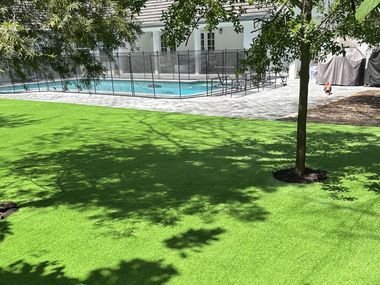
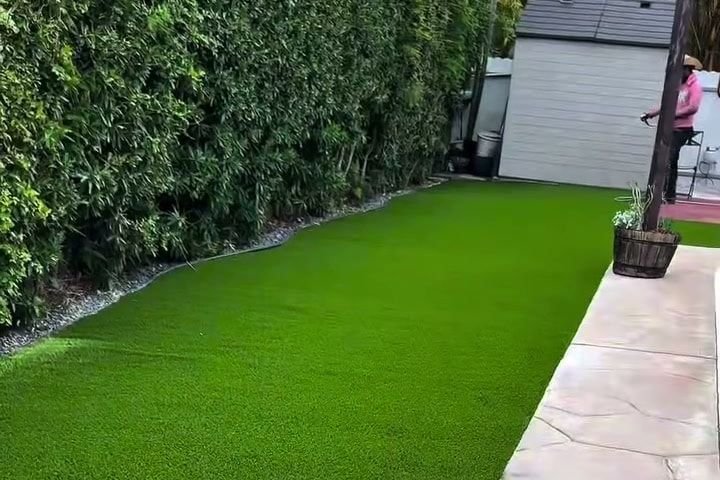
The same strip with even artificial grass, from the hedge to the pool deck.

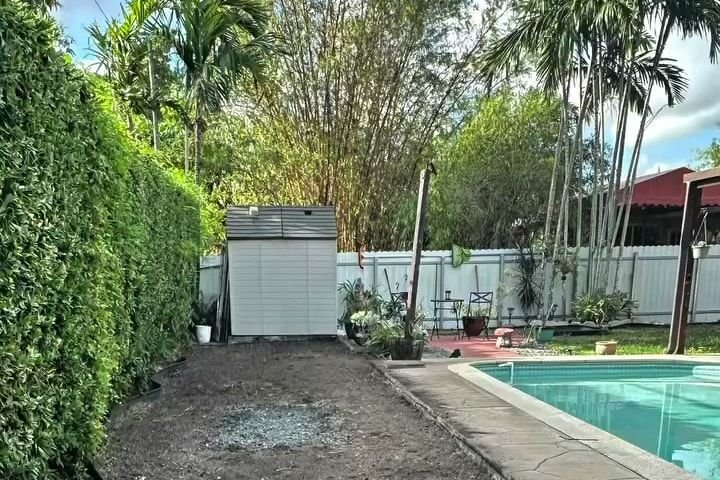
Strip of bare dirt and mud between the hedge and the pool edge, no grass.

0 shows the before photo in full, 100 shows the after photo in full.

Pool surround

The strip between the hedge and the pool was dirt and mud — natural grass survives neither the chlorine nor the constant foot traffic. Now it’s the most used part of the yard.

Miami-DadeMarch 2026
0203

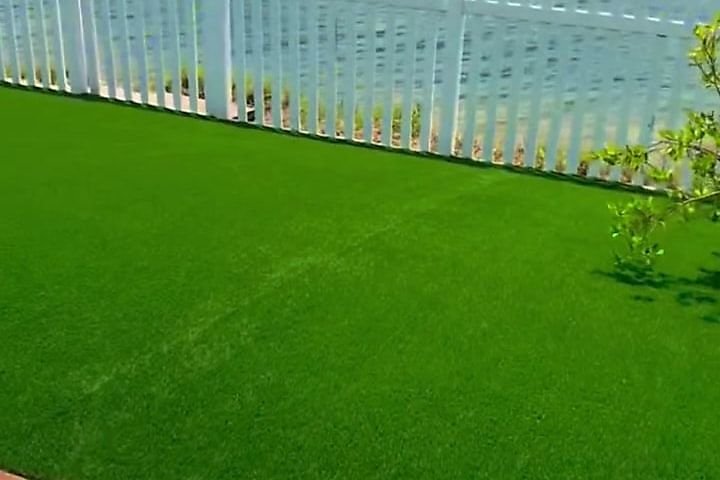
The same backyard with even green artificial grass up to the fence, facing the lake.

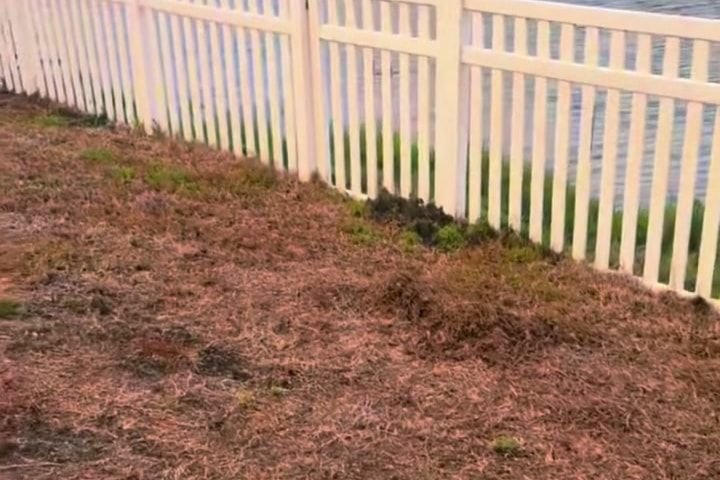
Backyard with dry brown natural grass up to the white picket fence, facing the lake.

0 shows the before photo in full, 100 shows the after photo in full.

Lakefront backyard

With the lake right there, the yard was the only thing out of place: burnt grass and bare dirt up to the fence. You can see the change from across the water.

Miami-DadeApril 2025

0303

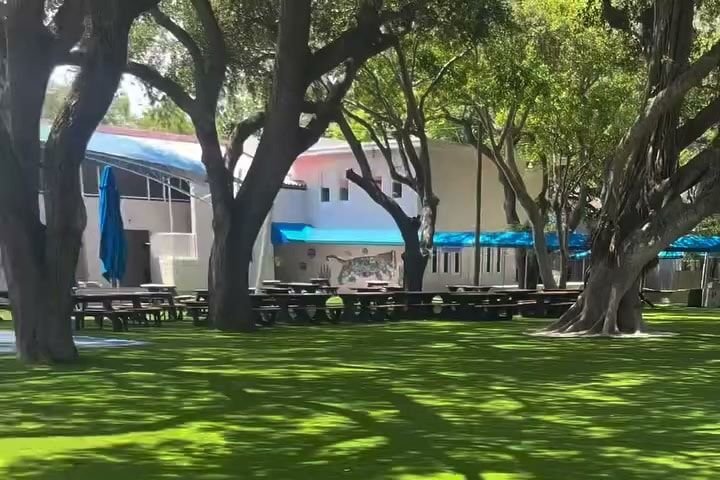
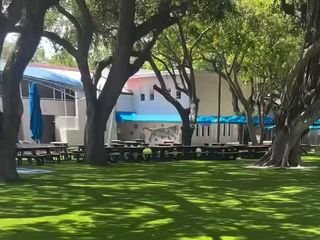
The same yard with green artificial grass under the oaks, next to the picnic tables.

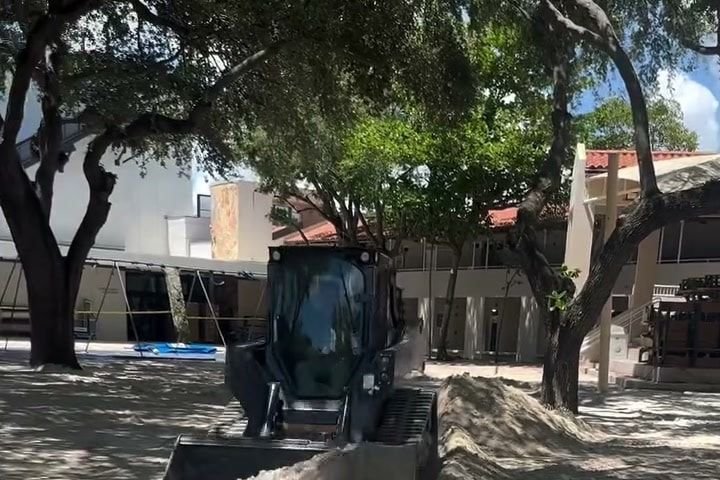
Sand yard under the school oak trees, with a skid-steer grading the base.

0 shows the before photo in full, 100 shows the after photo in full.

22,800 sq ft school courtyard

The largest job we’ve delivered. Nothing grew under the oaks and the ground was bare sand: machinery, real deadlines and an area nothing like a backyard.

Miami-Dade22,800 ft²August 2025

And there is more

These are just the ones with a before and after

For the rest of the work we have the finished photo. All of them, dated and uncropped.

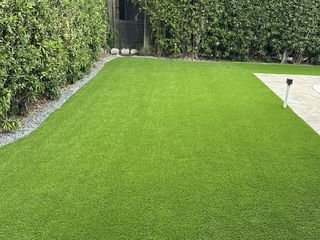
  • Large backyard with artificial grass and a tree in its open ring, screened pool and house behind.
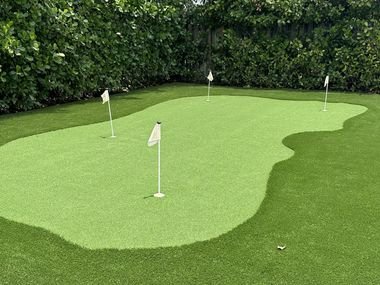
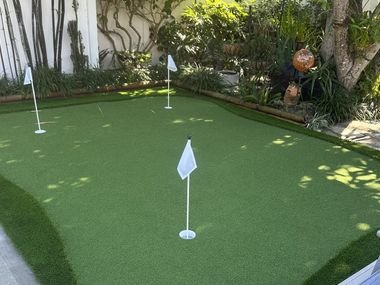
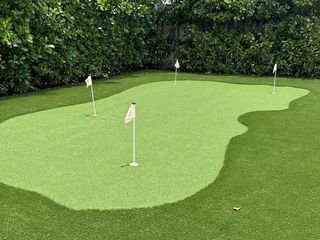
  • Artificial grass putting green with three white flags and a longer-fiber fringe, hedge behind.
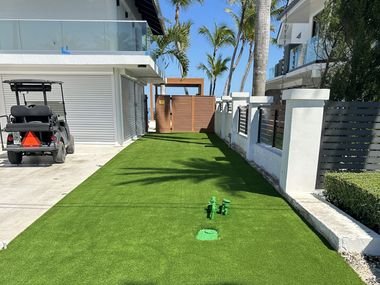
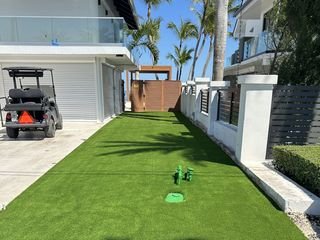
  • Strip of artificial grass along the driveway of a modern home, with a golf cart and palm trees behind.
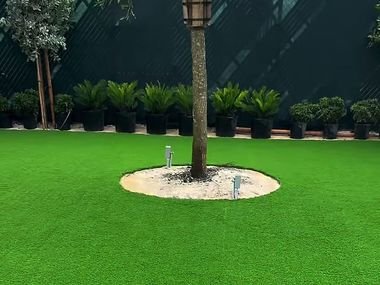
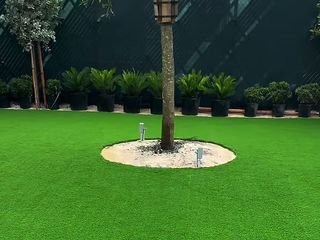
  • Artificial grass area at a business, with a tree in its open ring and potted plants behind.
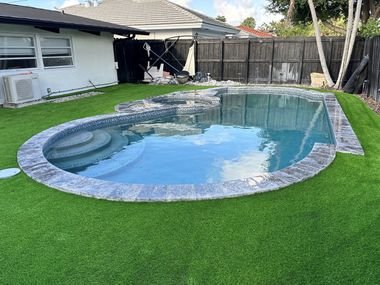
  • Backyard with artificial grass wrapping a curved pool with stone coping, beside a single-storey house.
  • Putting green with three flags surrounded by bamboo and tropical plants, next to a lounger.
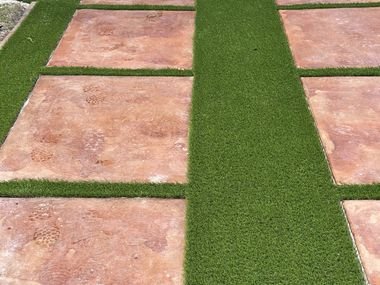
  • Side path of clay pavers with strips of artificial grass between them.
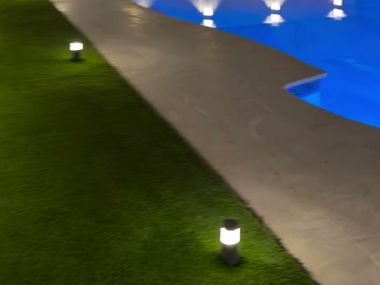
  • Pool patio lit at night with artificial grass beside the paving.
See all 29 finished projects

Everything, no scrolling

What you need to know, on one screen

Pick whatever matters to you. You don’t have to read all of it.

Not just backyards

We install artificial grass on any surface that has to look good year-round and put up with kids, dogs and parties.

See all five services

So you know exactly what’s going to happen

Hiring someone to tear up the ground at your house is a big deal. Here’s the whole process, step by step, with no surprises.

  1. You reach out and we come look

    WhatsApp or a phone call. We come out, measure the actual area and talk through what you want. The estimate is free and commits you to nothing.

  2. You get the price in writing

    With the square footage, the turf type and what’s included. If there’s anything about your city permit or your HOA we should check first, you hear it then — not later.

  3. We prepare the base

    We remove what was there, grade it, and compact a draining base. This is the part nobody sees and the part that decides whether it’s still perfect in three years. This is exactly where cheap installations fail.

  4. We install the turf

    Rolled out, every piece with the fiber running the same direction (otherwise you see mismatched patches in low sun), cut to fit, seamed and anchored at the edges.

  5. Infill, brush and clean up

    Infill settles the fiber and keeps it standing up. We brush it out, haul everything away and hand it over ready to walk on. We don’t leave a job half done.

Start with the free estimateSee the full guide

What people ask us before they decide

Including the awkward one. We’d rather you read it here than find out later.

Heat

2 questions
Does it get hot in the Miami sun?

Yes, and we’re not going to tell you otherwise. Any dark surface in direct Florida sun gets hot, and artificial grass is no exception: in a 2025 test at a Miami park, artificial turf read 150 °F while the natural grass beside it was at 112 °F.

What is also true is that it’s manageable. The heat only shows up in direct sun during the middle of the day; shade or an awning drops it a lot, color and infill type matter, and a quick pass with the hose cools it in seconds. When we come out we’ll tell you how many hours of direct sun your area actually gets and what to realistically expect.

Does it get hotter than sand or rubber?

In direct sun it heats up, like any dark or synthetic surface. What brings it down is shade, the type and colour of the infill, and a pass with the hose before recess. The measured numbers are in our FAQ, unvarnished.

Dogs, kids and parties

3 questions
Is artificial grass good for dogs? Does it smell of urine?

The smell doesn’t come from the turf — it comes from a bad installation. If urine can’t drain and sits between the turf and the fabric underneath, that’s where the odor builds. With a properly prepared draining base and the right infill, it passes through and rinses out with water.

If you have dogs, tell us before we start: the base and infill get prepared differently, and it’s far cheaper to do it right the first time than to fix it later.

Does artificial turf cushion a fall on its own?

No, and be wary of anyone who tells you it does. The cushioning comes from the layer underneath, and its thickness depends on the fall height of your equipment. If your area needs it, it gets measured and it goes in the estimate. If it is flat ground with no structures, it is not needed.

Will it take a bounce house or a party?

Yes, as long as the bounce house is not anchored with stakes driven in wherever. If inflatables go up often, mention it at the visit — anchor points can be planned so the surface does not get damaged.

Rain, pools and drainage

3 questions
What happens in a downpour or a hurricane?

A proper installation drains much faster than the compacted dirt in a typical yard, because water goes straight through the turf and out through the stone base. It doesn’t pool and it doesn’t turn to mud.

What matters here’s, again, the base and how the edges are anchored. A poorly graded base is why so many cheap installations sink or lift after a few years.

Will pool chlorine or salt damage it?

No. The fibre does not react to chlorine or salt water, which is exactly why it works along the edge. What matters there is drainage: splash-out has to be able to leave underneath instead of pooling against the coping.

What if my ground has a steep slope?

It can be installed on a slope, and that is where it pays off most: natural grass on a slope erodes and goes bare. What changes is the anchoring, which has to resist the surface wanting to slide, and the water handling, since it runs off faster.

Lifespan and maintenance

5 questions
How long does artificial grass last in Florida?

15 years or more in Florida when the base is done right. The sun and humidity here are among the harshest climates there are, and what makes the difference is not the grass: it is the base. That is what decides whether it is still flat three years in or starts moving.

Can you tell artificial grass is fake?

That comes down almost entirely to the installation, not the product. The two things that give artificial grass away are ground that wasn’t properly graded and pieces laid with the fiber running different directions — when that happens, low sun shows the panels as mismatched patches.

It’s one of the reasons we show photos of finished jobs instead of catalog photos.

What maintenance does artificial grass need?

Far less than natural grass, but not zero. Rinse it now and then, clear leaves and debris, and brush any heavily walked area so the fiber stands back up. No mowing, no watering, no fertilizer, no resodding.

Does it need anything to keep rolling true?

Brushing now and then and topping up the sand periodically, which is what keeps the fibre standing and the speed even. It is not much work, but skip it and the ball gets slower month by month.

What if oil or fuel drips on it?

Clean it at the time with water and a mild soap — the fibre does not absorb it, it sits on top. What to avoid is leaving the stain for months and then going at it with a strong solvent.

The job: how it works, how long

10 questions
Can artificial grass go over concrete?

Yes, and it’s the standard approach on balconies, rooftops, patios and driveway strips. What changes is the prep: over concrete, drainage has to be solved differently so water doesn’t sit on top.

How long does an artificial grass installation take?

A normal residential yard is one or two days of work, not weeks. What moves that number most is not the square footage: it is how much has to come out first and how the machine gets in. When we come out we give you a specific timeline.

Can it go straight over my existing lawn?

No. Organic material left underneath rots and settles, and within months the surface is no longer flat. What is there gets removed and a compacted draining base goes in its place. It is more work, and it is the difference between lasting and not.

How long does a normal residential yard take?

Most residential yards are done in one or two working days, depending on size, what has to come out, and access to the property. At the visit we tell you the actual days for your job, not an average.

Can it be done without closing the whole yard?

In most cases yes, working zone by zone. At a school or a condo that gets agreed before we start, because it changes how the job is organised and how many days it takes.

How is it finished against concrete so it does not peel?

It depends what it meets. The strip is cut to size and fixed at the edge, and the key is that it finishes flush and not proud. An edge that sticks up is the one that catches, and an edge merely laid in place peels at the first turning wheel.

Can you work in phases without closing the whole space?

Yes, and in a space that stays in use it is usually the only sensible way. The area is split into zones and each one is handed back usable before the next opens up. It has to be planned before starting, because it changes the total days.

Do you work to construction schedules alongside other trades?

Yes. What we ask is that the date and the dependencies are clear from the estimate onward: what has to be finished before we come in, and what follows us.

Can you install artificial grass yourself?

You can, and on a small flat strip it comes out fine. What almost never comes out fine DIY is the base: it needs a compactor, knowing how much material goes in, and building the right fall — which is exactly the part that decides whether it lasts. If you are doing it yourself, give the base three times the time you think it needs.

Can it be installed any time of year in Florida?

Yes. There is no season here when the work cannot happen; the only thing that disrupts it is rain, because a wet base does not compact properly and has to drain first. In the wet season that can add half a day.

Where it can go

7 questions
How much space does a putting green need?

Less than most people think. A strip of yard can hold a one or two hole green that gets used daily if the shape is used well. What we do not recommend is forcing in more holes than fit — it plays worse and you notice.

Can it be built with slopes and breaks?

Yes, and that is what keeps a green in use past the first month. The contours are shaped into the base before the surface goes down, so they have to be decided up front: changing them later means lifting the green.

Can the green be combined with a lawn area?

Yes, and it is the most common setup. The green goes in with its short fibre and the rest of the yard with normal fibre, and the line between them is finished so it reads as deliberate rather than as a patch.

Can I drive over the strips?

Yes, if the base is compacted for it from the start and the edge is anchored and flush with the concrete. Weight is not what ruins it. What lifts it is an edge sitting proud with a tyre turning right on top of it.

Does it work for the front walkway?

Yes, and it is one of the places where the difference shows most: constant traffic, partial shade and little width are precisely the three things natural grass cannot handle together.

Does it work for a waterfront property?

Yes, and it is one of the clearest cases, because airborne salt kills natural grass gradually without warning. Synthetic fibre does not react to salt. We have several waterfront jobs in the gallery.

How heavy is it, and will a balcony or roof deck take it?

The grass itself weighs little; the weight is in the sand infill. Over concrete, a balcony or a roof deck it goes in differently — no granular base, and drainage solved another way — precisely so it does not load the structure. It is a separate job and it gets decided by looking at it.

Price, and what moves it

2 questions
How much does artificial grass cost in Miami?

It comes down to five things, and none of them can be guessed over the phone: the condition of the ground, how much has to be removed, access to the yard, the type of turf, and the real square footage. That is why the number comes out of the visit: we come, measure the actual area, and give you the price in writing, free and with no commitment.

What we will tell you on the spot is how much of that price is the base — the part you never see — and why that is the part you do not want to cut.

Why are there no prices on this website?

Because a price per square foot given without seeing the yard is a made-up number, and in this trade it is usually the hook before the real one. We would rather the first number you see be the final one, in writing.

If you just want a ballpark before you call, send us your rough square footage on WhatsApp and we will point you in the right direction.

Areas, permits and the company

4 questions
Can my HOA stop me from installing artificial grass?

It depends on whether it is visible from the street. Florida law — Statute 720.3045, enacted by Chapter 2023-64 and amended by Chapter 2024-221 — is not an artificial grass law: it is a general rule saying a homeowners association may not restrict you from installing things on your parcel that are not visible from the parcel frontage, from an adjacent parcel, from an adjacent common area or from a community golf course. And it names artificial turf expressly, in those words, among its examples.

Two caveats the statute carries itself. On the front yard and anywhere else that is visible, the HOA still decides, and in Miami-Dade and Broward the usual requirement is prior architectural-review approval. And the protection falls away where general law or a local ordinance prohibits it — your city may also require its own permit depending on the area covered.

This is not legal advice: it is what the statute says and what we run into on the job. We check it with you before we start, so you do not find out with the yard already done.

Do you install artificial grass in my city in Miami-Dade or Broward?

Yes. We work throughout Miami-Dade and all of Broward, both counties in full. The full list of cities, with both areas mapped, is on the contact page. Message us with your address and we will confirm right away.

Is artificial grass the same as synthetic turf or fake grass?

Yes, it is all the same product. Artificial grass, synthetic turf, fake grass — and in Spanish grama artificial, césped artificial or pasto sintético — are different names for the same thing. The name tells you where the person is from, not what the material is.

There is no difference in material or quality behind any of the names.

What is the largest project you have delivered?

22,800 sq ft: a school yard, posted on the company’s Instagram account in August 2025. It is in the gallery on this page with a link to the post.

See all 36 questions

Natural grass in Miami: why keeping it alive is a fight almost nobody wins

It’s not your fault. It’s the climate, the soil, and a Miami-Dade rule — published on miamidade.gov and in force year-round — that lets you water two days a week and never between 10am and 4pm.

  • Natural grass: you mow every week and it still looks the same

    Grass here never goes dormant. You cut it, it grows, and next Saturday you start over.

  • You water when the county allows, not when the lawn needs it

    Odd addresses: Wednesday and Saturday. Even: Thursday and Sunday. Never 10am to 4pm. Your lawn gets thirsty on a different schedule.

  • Some spots will never grow

    Under a tree, along the wall, wherever the kids or the dog run. That patch stays dirt forever.

  • You pay every month for something that never quite looks right

    Water, lawn service, fertilizer, resodding. And the yard still isn’t the one you want to show off.

Close-up of the artificial grass fiber: two-tone green blades mixed with brown thatch.

This is it up close

Two-tone fiber with brown thatch mixed in. What gives artificial grass away isn’t the product: it’s ground that wasn’t properly graded and pieces laid with the fiber running different ways.

What our customers say. None here yet. We’re asking customers for permission to publish their names, and until they give it we’d rather show nothing. In the meantime, look at the work above and ask us anything.

Contact

Get your free estimate

Message us on WhatsApp and we’ll get back to you. If you’d rather we call, leave your number and we will.

Message us on WhatsApp

Fastest way. We reply right there.

Call now · (305) 896-8105

Areas we serve

  • Miami-Dade County
  • Broward County

Official US Census county outlines. If your address is in either one, we come.

Or leave your details

What we should call you

So we can call or text you

So we can send the estimate in writing

Area, rough size and what you have in mind. The more you tell us, the better the estimate.

Submitting opens WhatsApp with your details already filled in — all you do is hit send.

We use your details only to reply to you. We don’t share them.

Message us on WhatsApp