Schools, condos and homes
Artificial turf for playgrounds and play areas
A surface that takes running, falling and full sun all day, does not turn to mud when it rains, and does not send kids home covered in dirt. This is where artificial turf solves the most problems at once.
Miami-Dade and Broward, both counties in full
The problem is not the equipment, it is the ground under it
A Florida play area swings between two extremes in a single day: the afternoon downpour turns it to mud and the sun afterwards bakes it hard and bare. Between the two, the high-traffic spots — under the swings, at the bottom of the slide — are down to dirt within a couple of months.
No natural grass survives that, and sand or mulch solves the fall but migrates, sticks to clothes and ends up inside the building. A continuous turf surface stays where it was put and looks the same in September as it did in May.
Where there is fall height, something else goes underneath
This is what separates a play area from an ordinary yard, and it is worth stating plainly: turf on its own is not a shock-absorbing surface. Where there is equipment with height, the cushioning comes from the layer underneath, and its thickness is set by the fall height of that specific equipment.
So it is not a catalogue choice, it is a measurement: we look at the equipment you have or plan to install, the height a child can fall from, and that determines what goes below. If yours needs it, we say so at the visit and it goes in the written estimate with its cost.
If the area is flat ground — a running space, a daycare yard with no tall structures — none of that is needed and none of it gets charged.
Hygiene, which is every school’s second question
A play surface gets cleaned because it gets dirty: food, drinks, and whatever the kids bring with them. Turf rinses down with a hose and drains through, so it does not pond like a continuous rubber surface or hold dirt the way sand does.
What makes that work is drainage again: if the water has nowhere to go, no amount of cleaning helps. Which is why on a school yard the fall and the base get worked out before anything else.
The largest job we have delivered was exactly this
The company’s largest project is a 22,800 sq ft school yard, posted on its own Instagram account in August 2025. It is in the gallery below, along with a corridor at the same school.
That is not a brochure figure — it is a job you can open and look at. On work that size what you are hiring is not only the surface, it is that the job gets sequenced around the school calendar and does not leave the yard half finished on a Monday morning.
School and play area work
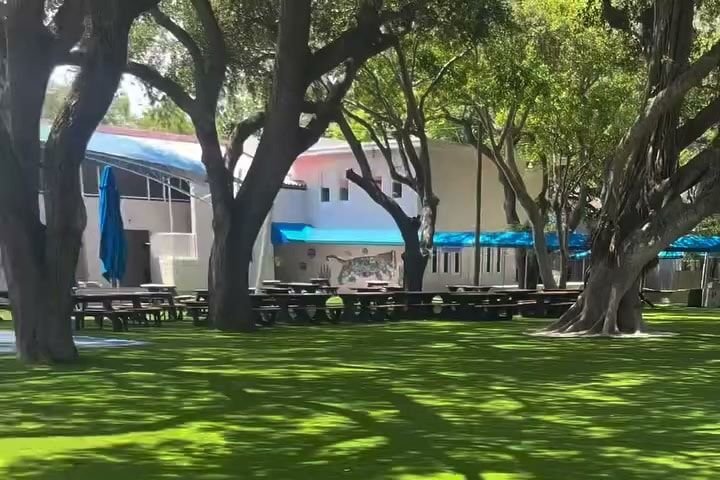
22,800 sq ft school courtyard
The largest job we’ve delivered. Nothing grew under the oaks and the ground was bare sand: machinery, real deadlines and an area nothing like a backyard.
See the post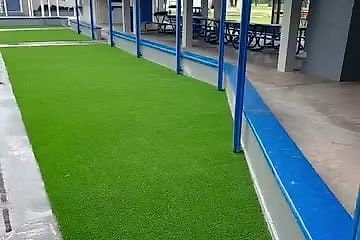
Same school, the walkway
Hundreds of kids pass through here every day. It used to be dirt that got tracked into the classrooms with every rain; now it just gets swept.
See the post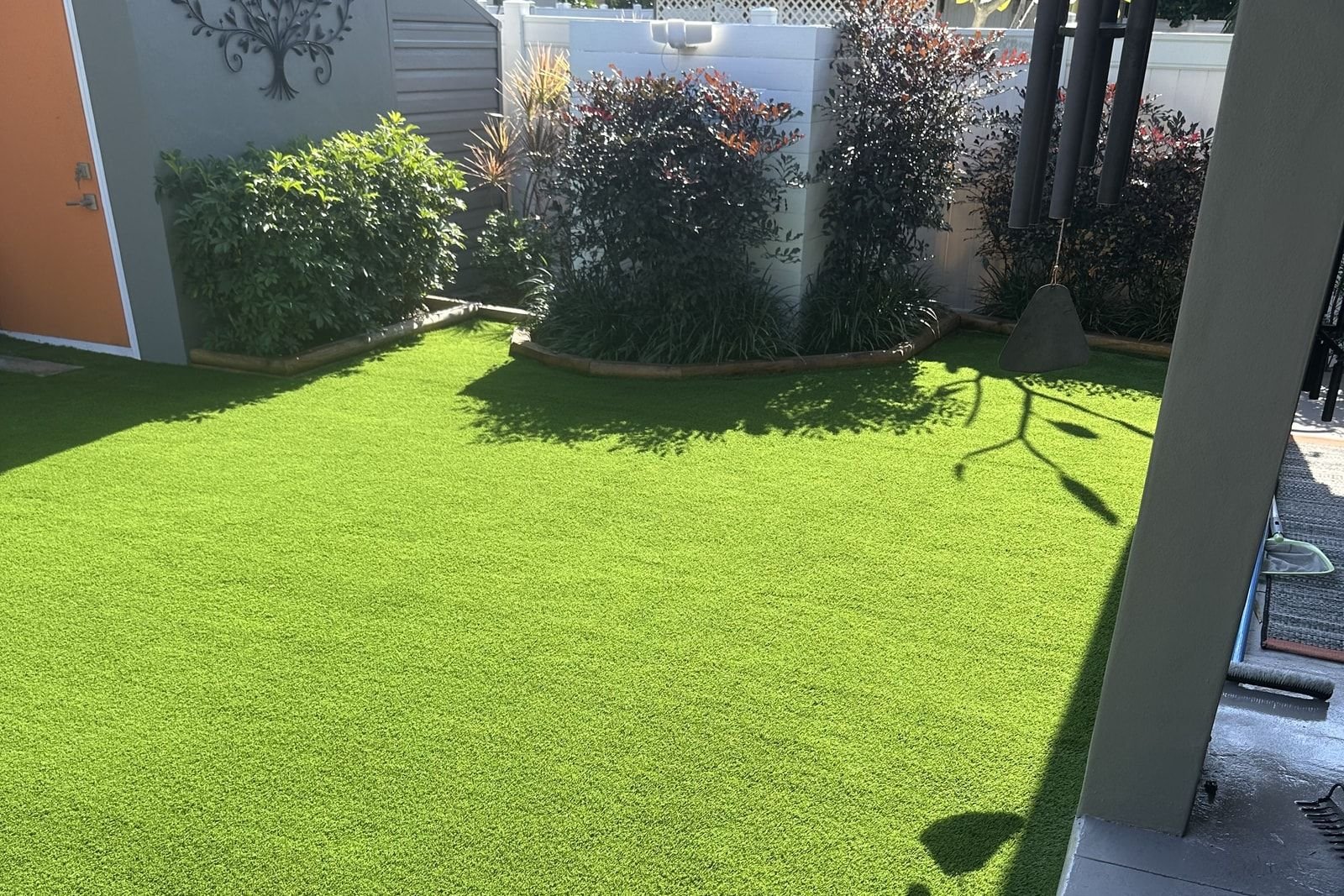
Backyard with a garden shed
The whole yard in turf, wrapping the curved beds and the shed. The edge is finished against the bed with no lip and no dirt showing.
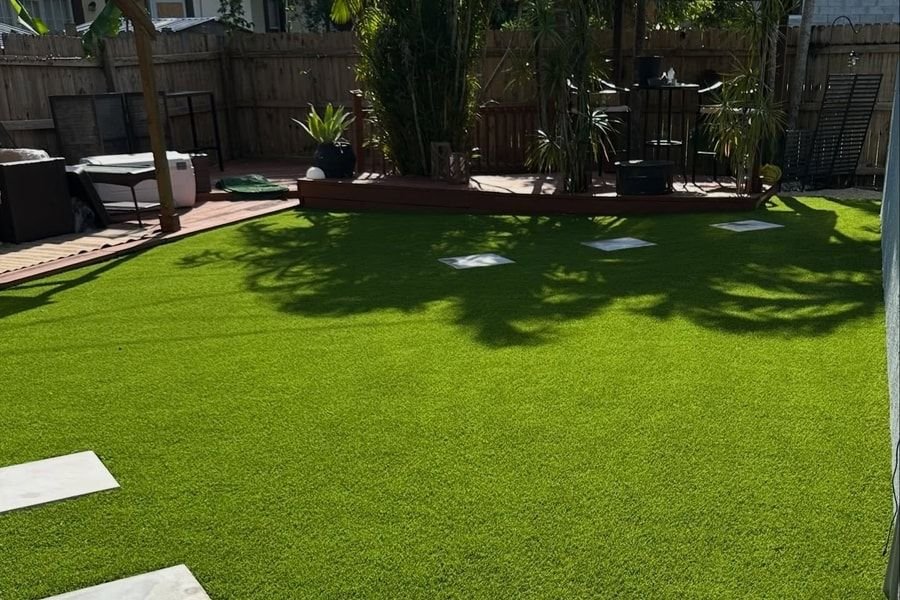
Backyard with stepping stones
Grass flush with the stones, no lifted edges and no open seams. That detail is the difference between a yard that looks installed and one that looks fake.
See the post
Questions about this service
Does artificial turf cushion a fall on its own?
No, and be wary of anyone who tells you it does. The cushioning comes from the layer underneath, and its thickness depends on the fall height of your equipment. If your area needs it, it gets measured and it goes in the estimate. If it is flat ground with no structures, it is not needed.
Can it be done without closing the whole yard?
In most cases yes, working zone by zone. At a school or a condo that gets agreed before we start, because it changes how the job is organised and how many days it takes.
Does it get hotter than sand or rubber?
In direct sun it heats up, like any dark or synthetic surface. What brings it down is shade, the type and colour of the infill, and a pass with the hose before recess. The measured numbers are in our FAQ, unvarnished.
Will it take a bounce house or a party?
Yes, as long as the bounce house is not anchored with stakes driven in wherever. If inflatables go up often, mention it at the visit — anchor points can be planned so the surface does not get damaged.
Is it for a school, a condo or your home?
We come out, measure it, and tell you what has to go underneath and what it costs. The estimate is free.