Homes and townhouses
Artificial grass for yards and backyards in Miami
The front yard, the back, the strip around the pool, or that corner where nothing ever grew because it never gets sun. It goes in once, it sits flat, and it looks the same in August as it does in January.
Miami-Dade and Broward, both counties in full
Why it makes particular sense in Miami
Miami-Dade allows watering two days a week. Natural grass at this latitude needs more than that to stay green, so most yards in the city live in a standoff: either the rule gets stretched, or you live with the burnt look of July.
Artificial grass takes that problem off the table. No watering, no mowing, and no dependence on rain or shade. In a yard that actually gets used — kids, dogs, a pool — it solves the other half too: no mud after the afternoon downpour and no dirt tracked into the house.
Shade, pool edges and the corners that never work
The spots where natural grass never takes hold are always the same ones: under a large tree, in the narrow run between the house and the fence, and along the strip the house keeps in shade all afternoon. Those places are not short on water, they are short on light, and light is not negotiable.
The pool edge is its own case. Splash-out carries chlorine or salt depending on the system, and that burns natural grass and washes the soil away with it. Artificial grass does not react to either, and finished properly against the deck it stops that bare strip that turns to mud every time somebody climbs out.
With dogs: the smell does not come from the product
This is the question we get most. Odour shows up when liquid stays in instead of draining out: a base that does not let water through, an infill that holds it, or an install with no fall. Over a properly compacted draining base, urine passes through the fibre the same way rainwater does and leaves underneath.
The rest is ordinary upkeep: solids get picked up like in any yard, and a pass with the hose now and then handles the rest. If there is a dog in the house, say so during the visit. It changes which infill makes sense and how much fall the base gets.
What decides whether it still looks right in three years
Not the grass. What sits underneath it. The part nobody sees — stripping out what was there, grading, and compacting the draining base — is what decides whether the yard stays flat or starts to dip and wrinkle. It is also the part that gets cut when somebody quotes far below everyone else.
The other half is the finish: every piece of fibre laid in the same direction (otherwise, with the sun low, you see colour patches where the grain changes), seams lined up, and edges anchored. That is the difference between a yard that reads as grass and one that reads as a rug someone put down.
Real yards we have finished
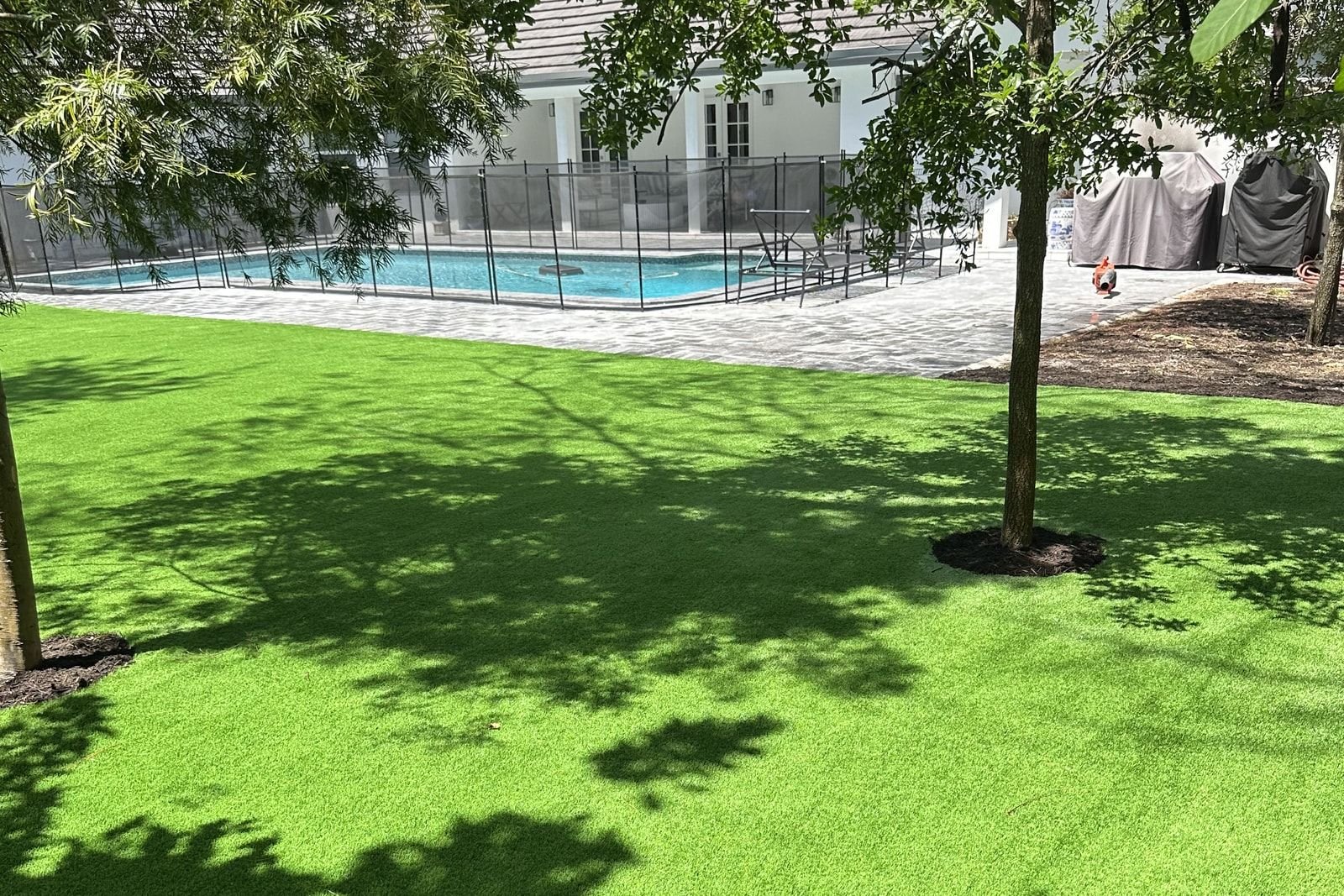
Backyard with a tree and pool
We leave an open ring around the trunk and cut it by hand so the tree keeps breathing. Under a tree is exactly where natural grass never took hold.
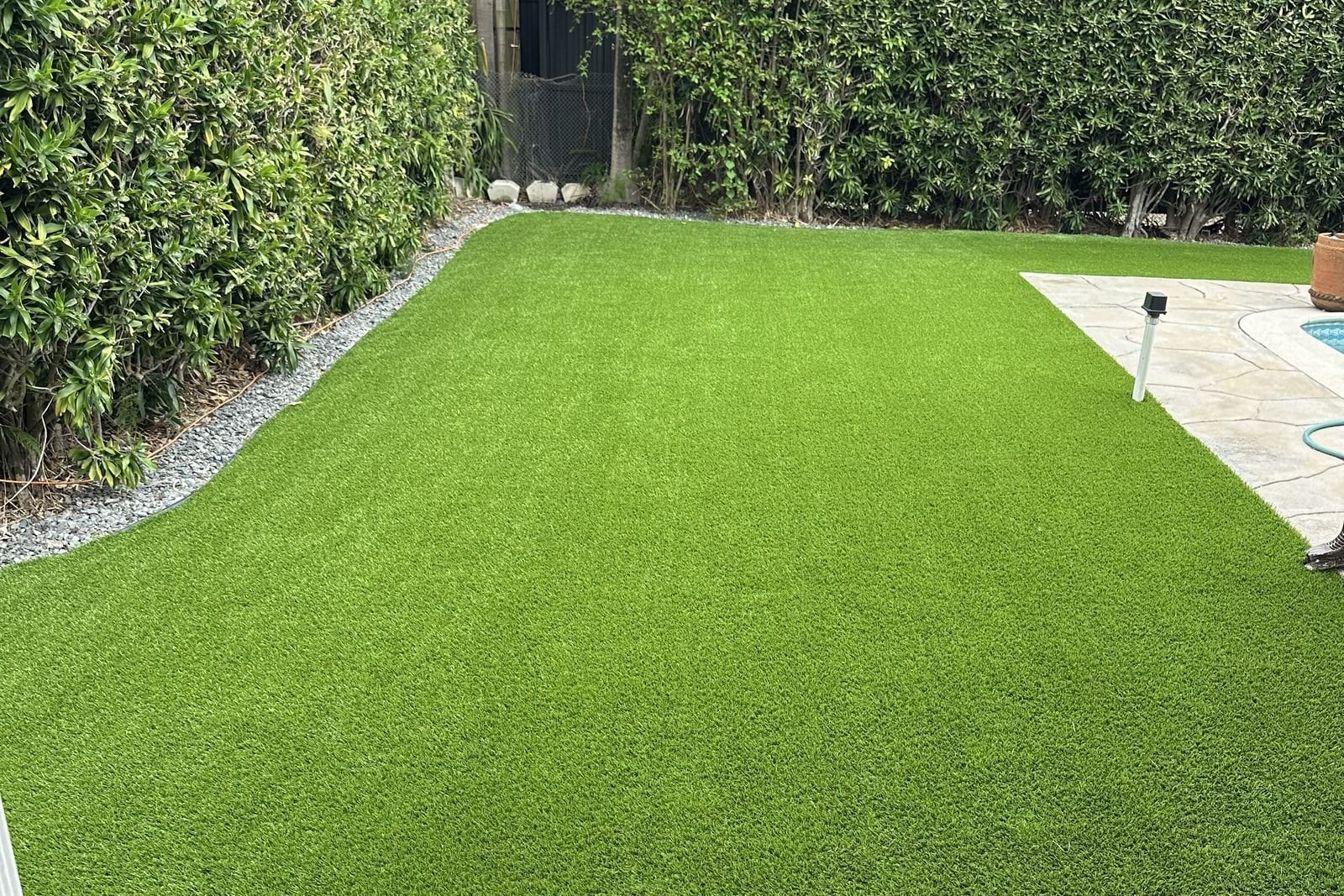
Same house, the backyard
The whole backyard at that same house, closed in by the hedge and finished against the curved edge of the deck. A curve eats half a morning. Get it right and nobody notices it.
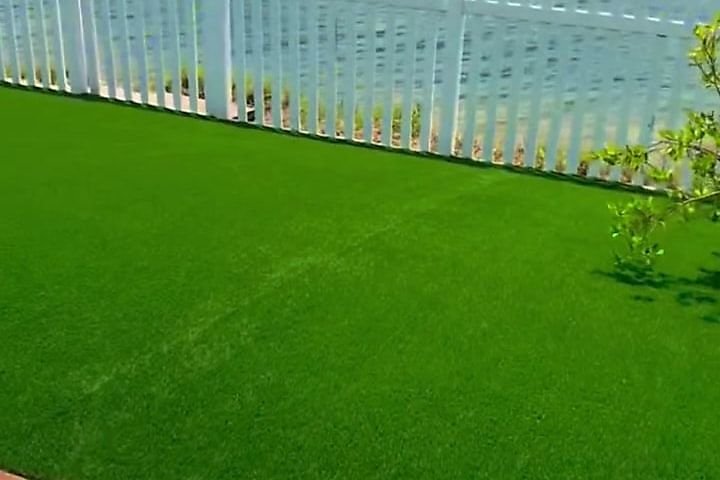
Lakefront backyard
With the lake right there, the yard was the only thing out of place: burnt grass and bare dirt up to the fence. You can see the change from across the water.
See the post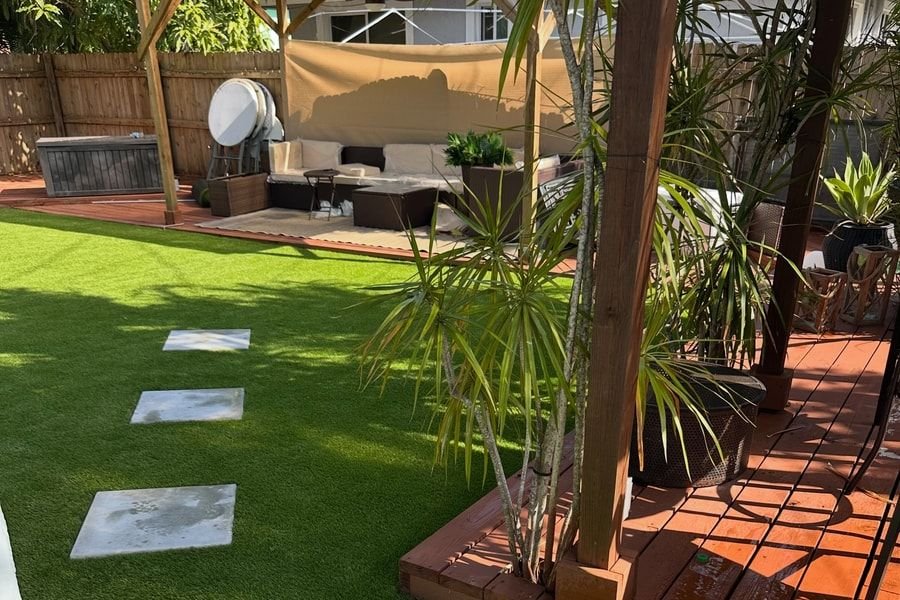
Same yard, from the deck
The grass meets the wood deck and the planters with no exposed edges. This is a yard that gets used, not one for a photo.
See the post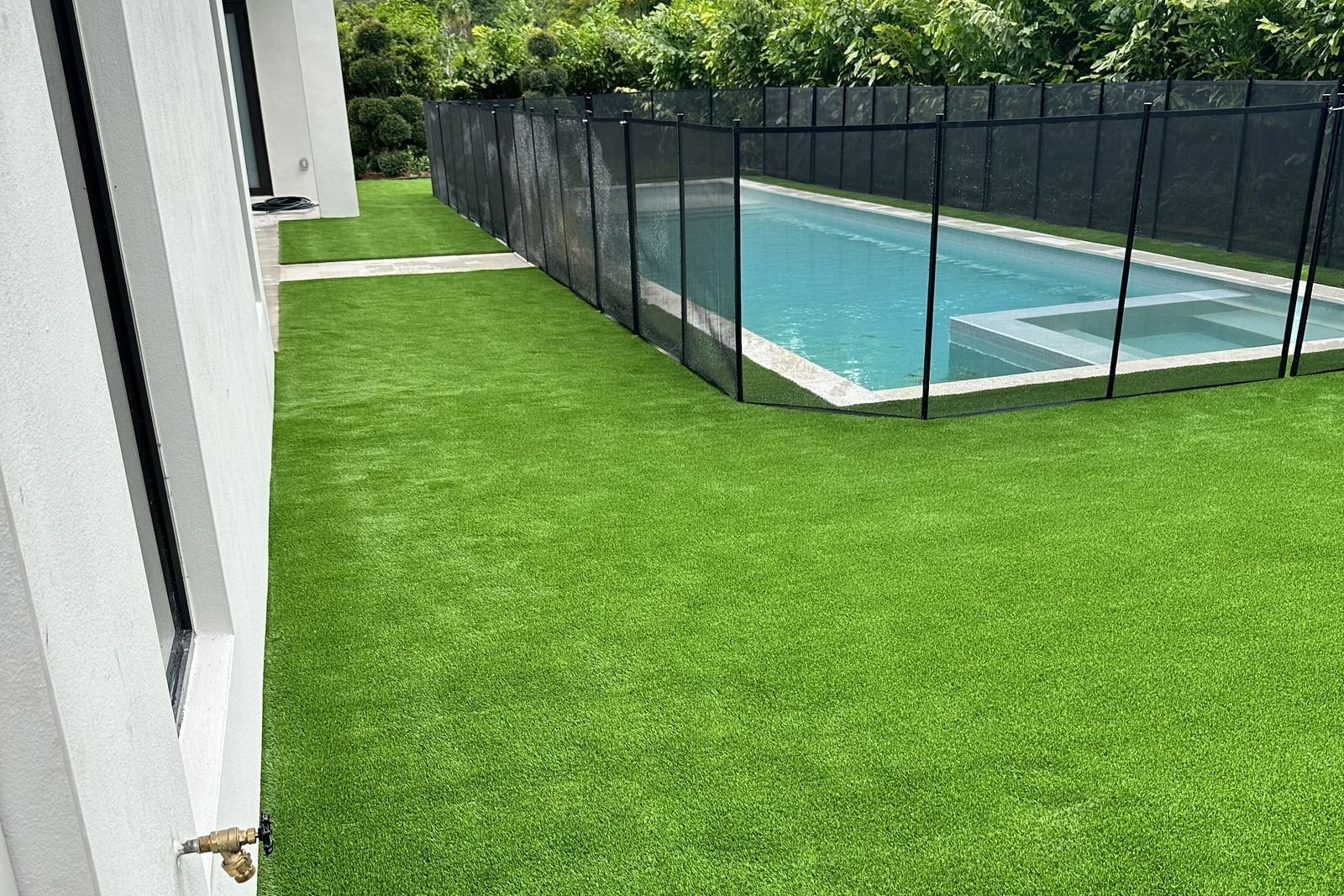
Long pool with safety fence
A surface this big and this exposed shows every dip in the ground. It runs level from the house wall to the pool edge, with no seam you can pick out.
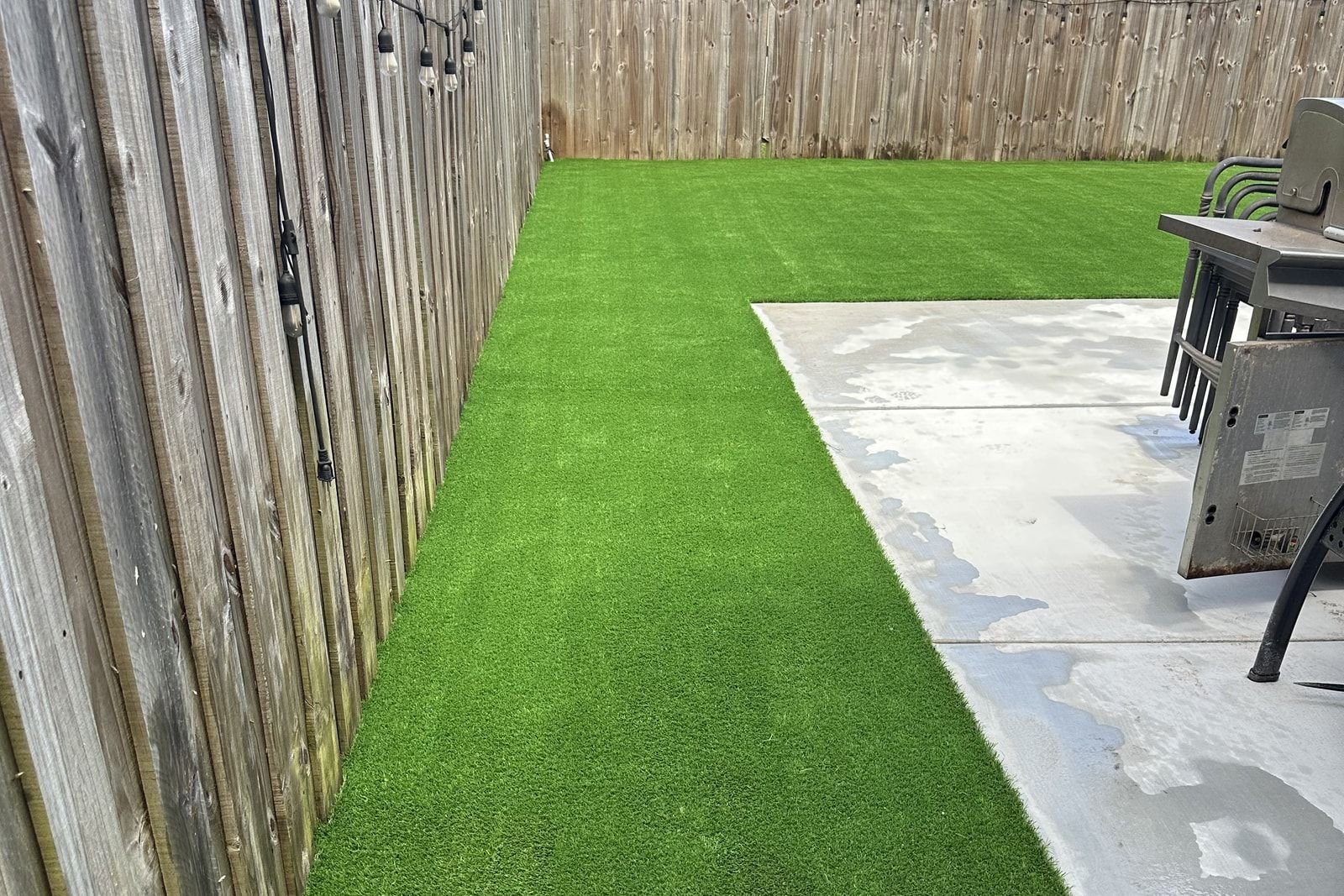
Backyard with a wood fence
The grass meets the edge of the concrete with none of the lip you get when the base isn’t properly compacted. You feel it on day one and you see it three years later.
Questions about this service
Can it go straight over my existing lawn?
No. Organic material left underneath rots and settles, and within months the surface is no longer flat. What is there gets removed and a compacted draining base goes in its place. It is more work, and it is the difference between lasting and not.
How long does a normal residential yard take?
Most residential yards are done in one or two working days, depending on size, what has to come out, and access to the property. At the visit we tell you the actual days for your job, not an average.
Will pool chlorine or salt damage it?
No. The fibre does not react to chlorine or salt water, which is exactly why it works along the edge. What matters there is drainage: splash-out has to be able to leave underneath instead of pooling against the coping.
Want to know what your yard would cost?
We come out, measure it, and give you the price in writing. Free, and it commits you to nothing.